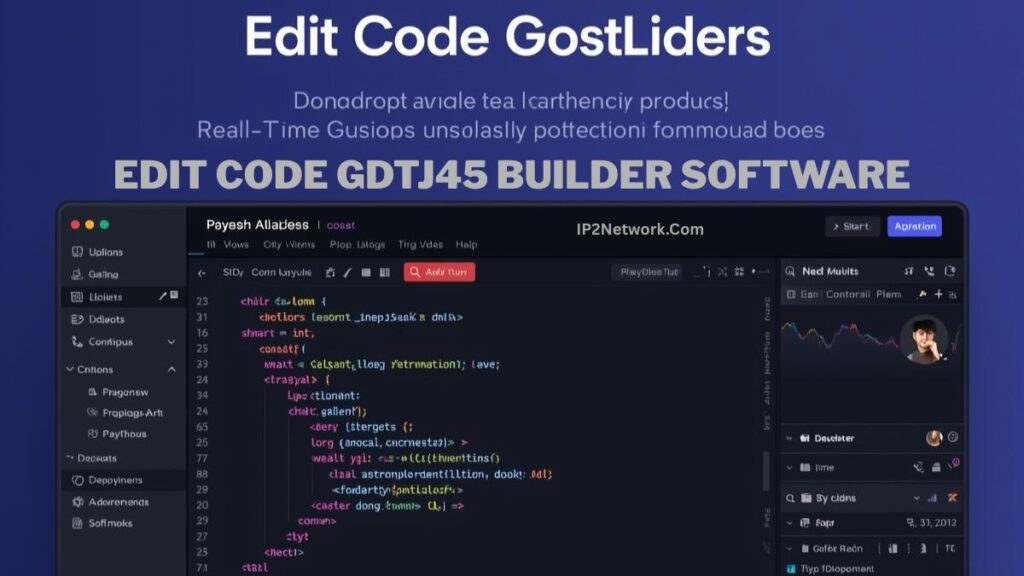
Editing code inside GDTJ45 Builder Software is a smooth, efficient process when you know the right workflow and best practices. This guide walks you through everything: the built-in editor, project structure, quick edits, debugging, version control, refactoring tips, and performance-savvy practices so your edits are safe, fast, and maintainable.
Whether you’re a beginner prototyping a small utility or an experienced dev polishing a module, this article gives you practical steps and actionable advice to edit code confidently in GDTJ45 Builder. Discover the easiest way to edit code in GDTJ45 Builder Software. This guide covers tools, tips, and best practices to optimize your projects.
Why this guide matters
GDTJ45 Builder is designed for fast prototyping and automation. Editing code smartly in the builder saves time, avoids regressions, and keeps projects stable. This guide focuses on real-world techniques you can apply right away.
1. Understand the GDTJ45 Project Layout
Before editing, know where things live.
- /src — primary source files (scripts, modules).
- /templates — starter templates used for new projects.
- /assets — images, styles, static resources.
- /build — generated output (do not edit generated files).
- /config — project configuration and environment settings.
- /tests — unit and integration tests.
Tip: Always edit files in /src. Generated files in /build will be overwritten on next export.
2. Open the Built-In Code Editor
GDTJ45 includes a lightweight editor optimized for quick edits.
- Use the Project Explorer (left panel) to navigate files.
- Double-click a file to open it in an editor tab.
- Editor features to know:
- Syntax highlighting for supported languages (JS, Python, etc.).
- Line numbers and gutter for breakpoints.
- Autocomplete/intellisense for standard APIs.
- Quick search (Ctrl/Cmd+F) and multi-file search (Ctrl/Cmd+Shift+F).
- Mini diff to preview unstaged changes.
Quick shortcut examples:
- Save:
Ctrl/Cmd + S - Find/Replace:
Ctrl/Cmd + F/Ctrl/Cmd + H - Toggle terminal:
Ctrl/Cmd + ~
3. Make Safe Edits: Use a Feature Branch Workflow
Even for rapid prototyping, isolate changes.
- Open Version Control panel.
- Create a new branch named descriptively:
feat/add-export,fix/login-bug. - Edit files in
/src. - Commit small logical chunks with clear messages.
Why: Branches let you test and revert easily without breaking main.
4. Refactor Safely Inside GDTJ45
Refactoring is frequent when iterating fast.
- Rename symbols: use editor’s rename feature to update references across files.
- Extract functions: move repeated logic into helpers under
/src/helpers. - Keep modules small: one responsibility per module keeps edits predictable.
- Run tests after refactor to confirm behavior.
5. Debugging & Running Code Locally
GDTJ45 provides live-run and debug modes.
- Run (Preview): use the Run button on the editor toolbar to execute the current module in a sandbox.
- Console & Logs: view console output in the bottom panel; include structured logs (
info,warn,error) in your code. - Breakpoints: click the gutter to add breakpoints and run in debug mode. Inspect variables in the side inspector.
- Step controls: step over, step into, continue — use these to isolate logic problems.
Tip: Add temporary log statements (console.log / logger) for quick insight, then remove them before final commit.
6. Working with Templates & Generated Code
If you use templates:
- Edit the template source in
/templatesto update future projects. - When a project is generated from a template, copy template core code into
/srcbefore heavy edits—don’t edit template files directly for project-specific logic.
7. Testing Your Changes
Testing prevents regressions.
- Unit tests in
/tests/unit— run them through the Test Runner inside GDTJ45. - Integration tests for end-to-end flows.
- Quick smoke test: run the module with representative data to verify outputs.
- Automate when possible: use the CI preset (if configured) for nightly or on-push test runs.
Rule of thumb: Commit only after tests pass locally.
8. Common Edit Patterns & Examples
Example 1 — Fixing a small bug (pseudocode)
// src/utils/parseData.js
function parseData(raw) {
  if (!raw) return null;            // guard clause
  try {
    const parsed = JSON.parse(raw);
    return parsed;
  } catch (e) {
    logger.warn('parseData: invalid JSON', e);
    return null;                    // safer fallback
  }
}
Steps: edit file → save → run unit tests → commit.
Example 2 — Adding an export feature
- Add new function in
src/features/exporter.js - Wire it into
src/index.jsand update configconfig/export.json - Add
tests/exporter.test.jsand run tests
9. Best Practices for Clean Edits
- Small commits: one logical change per commit.
- Meaningful messages: fix: handle empty payload in parseData not update.
- Document API changes: update README or inline docblocks.
- Avoid editing generated files.
- Run linters and formatters (auto-format on save).
- Use feature toggles if you need new behavior behind a switch.
10. Handling Merge Conflicts
Conflicts happen when multiple edits touch the same lines.
- Use the built-in merge tool to pick changes or combine them.
- Test after resolving conflicts.
- If unsure, consult branch author or revert to small isolated change.
11. Performance Tips After Edits
- Avoid heavy synchronous loops — prefer streaming or batching.
- Cache repeated expensive computations (memoization).
- Keep I/O async where possible.
- Profile with built-in performance analyzer on large data sets.
12. Packaging & Deploying Edits
When ready:
- Merge your branch into main after review.
- Run full test suite and build/export.
- Generate a release artifact from build/.
- Tag the release (semantic versioning recommended).
- Deploy using your standard pipeline.
13. Troubleshooting Common Edit Problems
- Editor not saving: check disk permissions and free space.
- Autocomplete missing: restart the IDE or reindex the project.
- Breakpoints not hit: ensure debug mode is enabled and correct runtime selected.
- Imports failing: verify relative paths and module exports.
14. Security Considerations When Editing
- Avoid committing secrets; use environment config and secret stores.
- Validate all inputs — sanitize before parsing or executing.
- Keep dependencies updated to avoid known vulnerabilities.
- Prefer safe deserialization and avoid eval or similar risky calls.
FAQs About Edit Code GDTJ45 Builder Software
Q: Can I edit generated files in GDTJ45?
A: Avoid editing files in /build — they are overwritten. Edit source files in /src.
Q: Does GDTJ45 support Git?
A: Yes — use the Version Control panel to create branches, commit, and push changes.
Q: How do I debug code in GDTJ45?
A: Use the Run/Debug buttons, set breakpoints in the editor gutter, and inspect variables in the debug pane.
Q: What if my edits break tests?
A: Revert or fix the break; run the failing tests locally to isolate the issue before re-committing.
Q: How to safely refactor?
A: Rename with the editor tool, extract functions into helpers, and run full test suites after changes.